High cholesterol is a silent health risk that affects millions of people worldwide. Could it be impacting your health without you knowing? With proper awareness and proactive steps, high cholesterol is manageable, and you can take control of your well-being. This guide will help you understand cholesterol, its impact on your body, and how you can make lifestyle changes to lower your risk.
What Is Cholesterol?
Cholesterol is a waxy, fat-like substance found in your blood. Your body needs it to build healthy cells and produce essential hormones. However, not all cholesterol is created equal.
- Low-Density Lipoprotein (LDL): Often referred to as “bad cholesterol,” LDL can build up in the walls of your arteries, forming plaques that can restrict or block blood flow.
- High-Density Lipoprotein (HDL): Known as “good cholesterol,” HDL helps remove excess cholesterol from the bloodstream.
But here’s the kicker—not all LDL or HDL levels are the same for everyone. Regular monitoring of your cholesterol levels is essential to safeguard your health.
What Are the Risks of High Cholesterol?
Did you know high cholesterol doesn’t have noticeable symptoms? That’s why it’s often called a “silent danger.” Over time, excess LDL cholesterol can lead to severe health complications, including:
- Heart Disease: Elevated LDL levels contribute to plaque formation in arteries, increasing the risk of heart attacks.
- Stroke: Blockages caused by high cholesterol can reduce blood flow to your brain, potentially causing a stroke.
- Peripheral Artery Disease (PAD): This occurs when arteries in the extremities, like your legs, are narrowed, affecting circulation.
Unchecked cholesterol can quickly escalate, which is why early detection and management are key.
Lifestyle Changes for Managing Cholesterol
Tired of hearing the same advice about diet and exercise? Here’s why it actually works. Managing cholesterol starts with simple, everyday changes that can lead to a healthier life.
1. Rethink Your Plate
What’s on your plate makes all the difference. Incorporate these golden rules for heart-healthy eating:
- Cut Down on Saturated Fats: Found in red meat and full-fat dairy products, saturated fats can increase LDL cholesterol.
- Add More Fiber: Foods like oats, beans, and vegetables help reduce LDL levels.
- Opt for Healthy Fats: Replace butter with olive oil and choose fatty fish like salmon for their heart-friendly omega-3s.
2. Get Moving
Have you been putting off exercise? Just 30 minutes of moderate physical activity five times a week can raise your HDL levels and help lower LDL cholesterol. Whether it’s brisk walking or yoga, every bit counts!
3. Quit Smoking and Limit Alcohol
Smoking lowers your good cholesterol while damaging the walls of your blood vessels. Cutting back on alcohol can also prevent an increase in unhealthy cholesterol levels.
4. Consider Regular Testing
When was the last time you tested your cholesterol? Knowing your numbers is the first step to managing them effectively.
Why Wait? Take Control with Medical Profiles
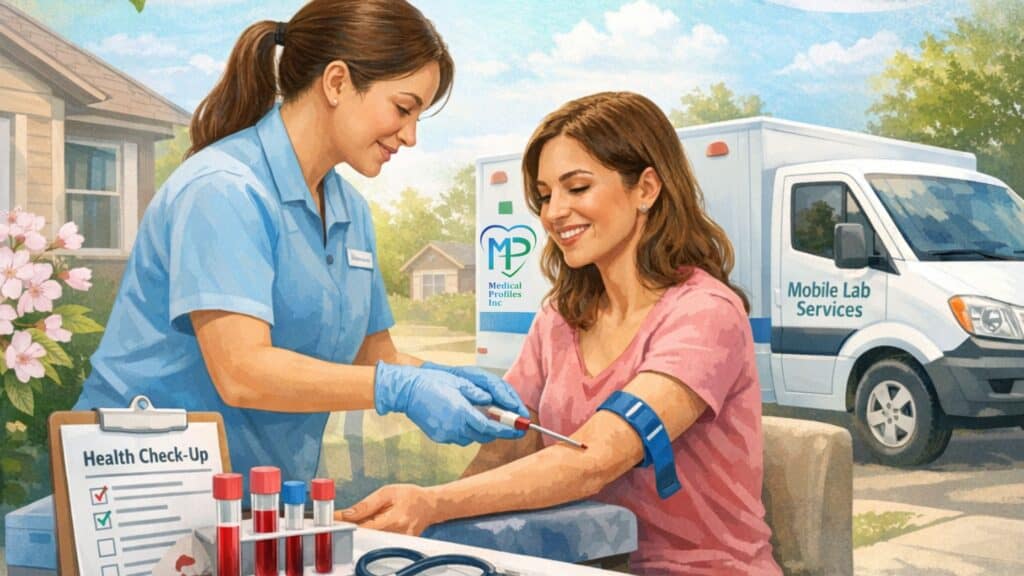
Your health deserves your attention. With Medical Profiles’ mobile lab testing services, you can check your cholesterol levels conveniently without leaving home. No more waiting rooms, no more stress. Whether at your home or office, we bring trusted, reliable testing to your doorstep.
Call (832) 251-3926 Today!
Simplify your healthcare and take the first step toward managing your cholesterol. Schedule your mobile lab test with Medical Profiles and start your wellness journey today!
By understanding your cholesterol levels and making proactive lifestyle changes, you can protect your heart and live a healthier life. After all, your best health starts with you!